
Why Digital Radiography Is Replacing Traditional Film in Industrial NDT
For decades, industrial radiography relied on film — slow to process, hazardous to handle, and difficult to archive at scale. Every inspection meant exposing a physical film sheet, developing it in a darkroom, and hoping the image came out clear enough to make a call. If it didn’t, the part went back through the whole process again.
Digital Radiography (DR) is changing that equation entirely.
The Core Shift: From Hours to Seconds
With DR systems, inspectors get real-time image capture. A defect that once took an hour to confirm — factoring in exposure, development, and review — now shows up on screen within seconds of the scan completing. That speed compounds across a production line: fewer bottlenecks, faster batch clearance, and inspectors who can make Go/No-Go calls without leaving the line.
This isn’t a marginal improvement. On high-throughput casting or welding lines, the difference between film and digital inspection can mean the gap between meeting a shipment deadline and missing it.
Radiation Exposure Drops With Fewer Retakes
Film radiography often demands multiple exposures per part — especially when the first image comes back underexposed, overexposed, or misaligned, and there’s no way to know until development is done. Every failed attempt means another exposure cycle for both the part and the operator standing nearby.
Digital systems let inspectors preview and adjust exposure settings in real time. That single change — seeing the image before committing — cuts retakes dramatically, which directly reduces cumulative radiation exposure for the people running the equipment day after day.
Why Shielding Requirements Used to Be a Bottleneck
Traditional industrial radiography setups typically require a dedicated lead-lined room to safely contain radiation during exposure. Building that room isn’t cheap, and it isn’t fast — site surveys, structural shielding calculations, and regulatory sign-off can add months to a facility’s inspection capability timeline.
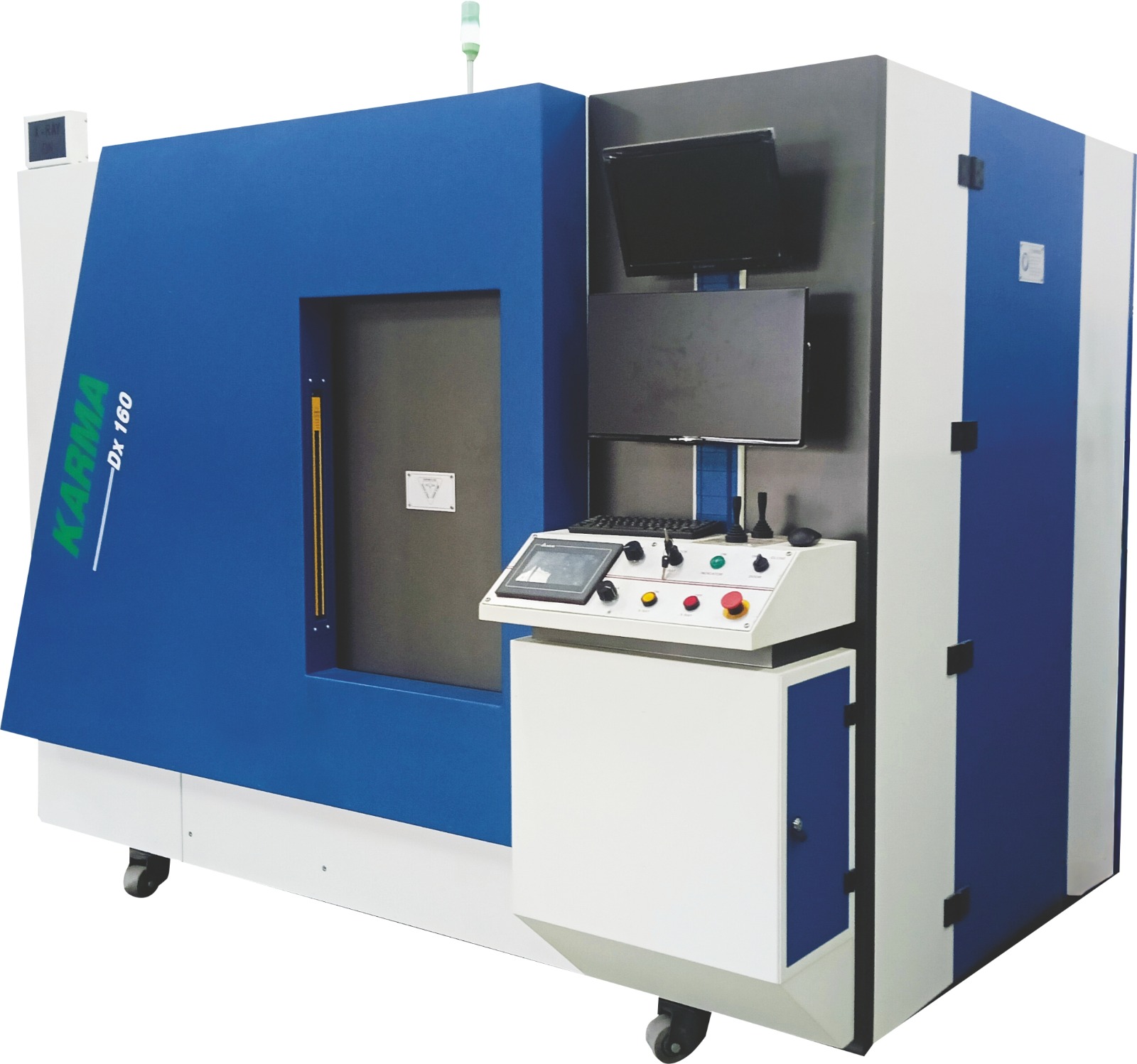
At Karma Innovations, our self-shielded DR and CT systems are built specifically to remove that bottleneck. The shielding is integrated into the system itself, so facilities don’t need to construct a separate containment room before they can start inspecting parts. That translates into faster adoption, lower upfront infrastructure cost, and inspection capability that fits directly into an existing production floor layout — no reconstruction required.
Where the ROI Shows Up Fastest
Not every facility sees the same return from switching to digital, but three use cases consistently show the clearest payback:
Aluminium casting inspection. Porosity, inclusions, and shrinkage cavities are notoriously hard to catch with the human eye alone. Digital radiography’s superior contrast sensitivity makes these defects visible early, before a part moves further down the value chain.
Weld integrity checks. Cracks, lack of fusion, and slag inclusions in welds carry real safety and liability risk if missed. Real-time digital imaging lets inspectors catch these defects at the point of welding rather than downstream, when rework is far more expensive.
High-volume automotive component QA. When you’re inspecting thousands of parts a week, the cumulative time savings from digital over film isn’t incremental — it’s the difference between meeting production targets and falling behind them.
The Bigger Picture
Digital radiography isn’t just a faster version of film — it’s a fundamentally different inspection workflow. Real-time feedback, reduced radiation exposure, lower infrastructure overhead, and instant digital archiving (no more physical film storage rooms) together make a strong case for why more facilities are making the switch every year.
If your team is still relying on film-based inspection, the transition doesn’t have to mean overhauling your entire facility. Self-shielded systems exist precisely to make that shift practical — without the cost and delay of traditional shielded rooms.